How to Read a Sheet Mask INCI List Like an Analyst
The first five ingredients decide most of what a mask can do. Here is the reading order we use on every label — and the three positions where a formula usually goes wrong.
- #INCI
- #ingredient list
- #beginner
Ingredients are listed by weight, not importance
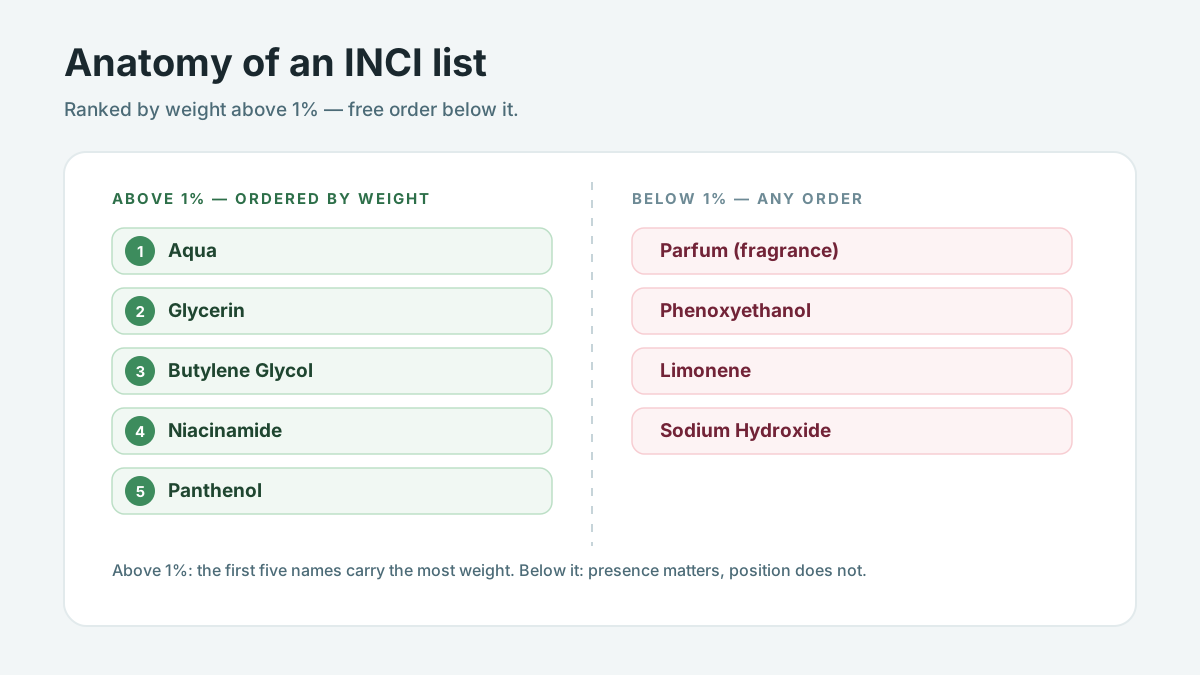
An INCI list runs from the highest concentration to the lowest, with one important twist: everything at or below 1% can be listed in any order. That single rule is why two masks with identical actives can behave completely differently on your face.
When we analyze a mask, the first five names get the most weight because they are almost always above that 1% line. If a hero ingredient like niacinamide sits at position nine, the honest answer is that nobody outside the lab knows how much is in there.
The first five names set the stage
- Aqua or a botanical water base first: normal for a sheet mask, nothing to fear.
- Glycerin, butylene glycol or propanediol early: these are the humectants doing the actual hydrating work.
- A second or third humectant before any active: usually a sign of a comfort-first formula.
- Alcohol denat. inside the top five: expect a fast-drying, potentially stripping wear.
Where the actives should sit
For a leave-on mask, a well-constructed formula keeps its headline active either in the top five or clearly declared with a percentage on the packaging. Ceramides and peptides are the exception — they work at very low percentages, so seeing them late in the list is not automatically a red flag.
What is a red flag is theatre: an extract named on the front of the sachet, sitting last in a list of forty ingredients with no percentage shown anywhere.
Rule of thumb: if the marketing hero is not in the top five and no percentage is declared, treat the claim as seasoning rather than treatment.
The last ten names matter more than you think
Preservatives, fragrance, essential oils and pH adjusters cluster at the end of the list, and this is where most reactions originate. Phenoxyethanol is a normal, well-studied preservative at legal levels. Limonene, linalool and a bare 'Parfum' are the ones that show up in contact-dermatitis case reports far more often.
The position of fragrance does not tell you how much is present, only that it is under 1%. For reactive skin, the presence alone is the signal — not the rank.
A 60-second triage you can do in a store aisle
- Scan the top five for your skin type's friendliest humectants and lipids.
- Search the list for the four usual suspects: Parfum, Alcohol Denat., Limonene, essential oils.
- Check whether the hero active is either early or percentage-declared.
- Look for at least one barrier-supporting ingredient if your skin is dry or sensitized.
Key takeaways
- The first five ingredients carry the most weight because of the 1% rule.
- Position four or five is not a dealbreaker for ceramides, peptides or preservatives.
- Fragrance, alcohol and citrus oils near the end are the most common reaction triggers.
- Percentage-declared actives on the label beat any clever INCI positioning.
Editor's shortlist
Featured Masks in This Guide
The masks referenced in this article, scored on the same ingredient-first rubric as the rest of the directory. Prices and availability are checked at the merchant.
A pure hydration ampoule mask with almost no way to go wrong. The sheet is thin and clingy, the essence is unscented, and the finish is dewy without any tackiness once it dries down.
- Sodium Hyaluronate
- Panthenol
- Glycerin
The comfort mask for windburn, winter dryness and post-cleansing tightness. It reads like a bowl of oatmeal for your face — creamy, unscented and almost impossible to react to.
- Beta-Glucan
- Glycerin
- Sodium Hyaluronate
A no-frills barrier mask for skin that feels tight, flaky or over-exfoliated. The essence is a thick humectant-lipid blend that sits comfortably for 20 minutes and leaves almost nothing sticky behind.
- Ceramide NP
- Sodium Hyaluronate
- Panthenol
Outbound retailer links are affiliate links to our merchant partners. They fund the research and never change a score — see our affiliate disclosure.
Related guides
More ingredient-first reading picked from the same categories and tags.
Ingredient Basics
Alcohol in Sheet Masks: Why Denatured Alcohol Is Not the Same as Cetyl Alcohol
One dries out your barrier, the other is a skincare emollient. We break down the alcohol family on an INCI list so you stop avoiding the wrong names.
October 1, 2026
Routines
How Often Should You Actually Use a Sheet Mask?
Daily masking is a marketing habit, not a dermatological rule. We dug into occlusion, over-hydration and barrier fatigue to work out a schedule that actually holds up.
September 21, 2026
Ingredient Spotlights
Niacinamide vs Hyaluronic Acid: Which Sheet Mask Do You Actually Need?
One ingredient manages oil and tone, the other moves water into the skin. If your mask is not doing what you expected, you may simply be holding the wrong tool.
September 12, 2026